Moving to the Triangle and Inheriting a Private Well? Here is Your No-Panic Guide
Welcome to the Raleigh-Durham area! If you’ve recently relocated to Wake, Franklin, Johnston, or Chatham county, you’re in good company. Thousands of families are moving to our region every month to enjoy the incredible communities, beautiful land, and thriving local economy.
However, many transplants from out of state or major metro areas are hitting a surprise during the home-buying process: The house they love relies on a private water well.
If you've spent your entire life on municipal city water, seeing that white pipe sticking up in the backyard can cause some minor panic. You might wonder: Is the water safe? What happens if it runs out? Am I responsible for fixing it?
Take a deep breath. Having a private well is fantastic. You have no monthly water bills, no added city chlorine or fluoride, and total control over your own utility.
To help you transition smoothly, here is the ultimate beginner's guide to owning a well in the North Carolina Piedmont, straight from the local experts.
1. How Does a Modern Well Actually Work?
Forget the old fairy-tale images of a bucket on a rope. A modern residential well is a highly engineered, automated, closed system.
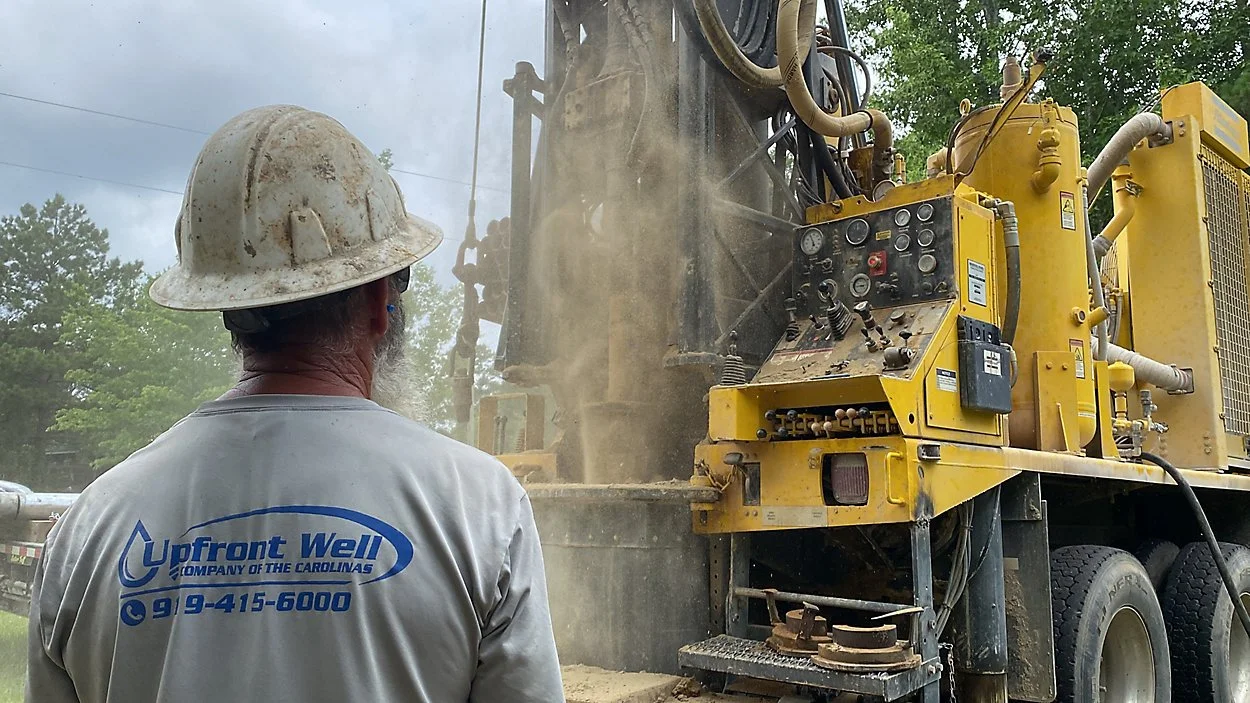
The Hole: We drill down deep into the earth—often between 200 and 500 feet here in the Triangle—to tap into natural water-bearing fractures within the underground granite bedrock.
The Pump: A heavy-duty electrical submersible pump sits near the bottom of that well, pushing water up through a pipe into your house.
The Pressure Tank: Inside your garage, crawlspace, or utility closet sits a blue or gray steel tank. This tank stores water under pressure so that every time you turn on a faucet or run the washing machine, water flows instantly without forcing the deep pump to turn on every single second.
2. The #1 Rule for Homebuyers: Get a Pre-Purchase Well Inspection
If you are currently under contract on a Triangle home, do not rely solely on the standard home inspector to check the well. General home inspectors look at cosmetics; they do not have the specialized tools to test the actual health of an underground water system.
Before your due diligence period ends, hire a certified well contractor to perform a comprehensive inspection. A true professional will test:
The Yield (Flow Rate): How many gallons of water per minute the well can consistently produce. You want to make sure the well won't run dry during back-to-back morning showers.
The Equipment: Checking the electrical draw of the pump and ensuring the pressure tank hasn't ruptured.
The Water Quality: A lab analysis to check for bacteria, nitrates, and regional mineral content like iron or manganese.
3. Simple "Do’s and Don’ts" for New Well Owners
Once you hold the keys to your new home, taking care of your well requires very little effort. Just stick to these basic rules:
DO keep the area clear: Keep a 10-foot radius around your backyard well head clear of debris. Never stack heavy mulch, firewood, or leaves against the pipe, as this invites bugs and rodents to try and find a way inside.
DON'T use chemicals nearby: Never spray weed killer, pesticides, or lawn fertilizers anywhere near the well head. What saturates into the topsoil right there could theoretically migrate down the casing.
DO protect it from freezing: In the winter, ensure your well head cap is securely fastened, and any exposed piping in unheated utility sheds is properly insulated.
DON'T park on it: Never drive heavy equipment, trucks, or ride-on lawnmowers over the area directly surrounding the well head to prevent crushing underground conduits.
Enjoy Your Clean, Free Water!
Once you get used to it, most transplants realize they actually prefer well water over city water. It’s cold, crisp, and completely free.
Meet Your Expert:
Felton Jacobs | Founder & Master Well Contractor Felton Jacobs isn't just the name behind the company; he’s the boots-on-the-ground expert who has been drilling through North Carolina's tough Piedmont rock since 1989. With over three decades of hands-on experience, Felton has seen every water challenge Raleigh and Franklin County have to offer.
Professional Credentials:
NC Certified Well Contractor: Level A (Highest Certification Level)
Specialization: High-Pressure Air-Hammer Drilling & Complex Pump Systems
Memberships: Active member of the North Carolina Ground Water Association (NCGWA) and the National Ground Water Association (NGWA).
Local Authority: 35+ years serving Louisburg, Raleigh, Wake Forest, and the surrounding Triangle area.
“At Upfront, we don’t just drill holes; we build reliable water systems for our neighbors. My goal is to make sure every customer gets an honest assessment and a well that lasts a lifetime.” — Felton Jacobs