Slow Water or Muddy Flow? How "Well Rehabilitation" Can Save Your Existing Well
When a private well starts producing less water, sputtering at the kitchen faucet, or pumping out dirty, silty sediment, many homeowners instantly fear the worst. The immediate thought is usually: "Oh no, my well is dying and I’m going to have to spend $15,000+ to drill a brand-new one."
Before you panic—or let a high-pressure salesperson convince you that drilling a new hole is your only option—you should know about well rehabilitation.
Just like a roof or an HVAC system, water wells age. Over time, sediment settles, minerals build up, and underground rock fractures can become choked off. In many cases, an existing well doesn't need to be abandoned; it just needs a professional cleanout to bring it back to peak performance.
Here is how well rehabilitation works and how to know if your system is a good candidate.
Why Do Wells Lose Flow and Water Quality Over Time?
A residential well drilled into North Carolina granite or bedrock relies on open fractures and veins in the stone to feed water into the casing. Over 10, 20, or 30 years, several natural processes can restrict that flow:
Sediment & Silt Accumulation: Fine sand, mud, and rock dust naturally settle at the bottom of the well, gradually burying the pump or clogging the lower intake areas.
Mineral Scale & Incrustation: The Piedmont region is rich in minerals like iron, manganese, and calcium. Over time, these minerals form a hard crust over the rock fractures—essentially plugging the tiny "faucets" in the stone wall underground.
Bio-Fouling: Naturally occurring, harmless groundwater bacteria can create a sticky biofilm that traps fine sediment and restricts water movement.
Ground Movement: Subtle shifting in the surrounding water table or earth can dislodge pocket sediment, turning clear water cloudy overnight.
How Does a Professional Well Cleanout Work?
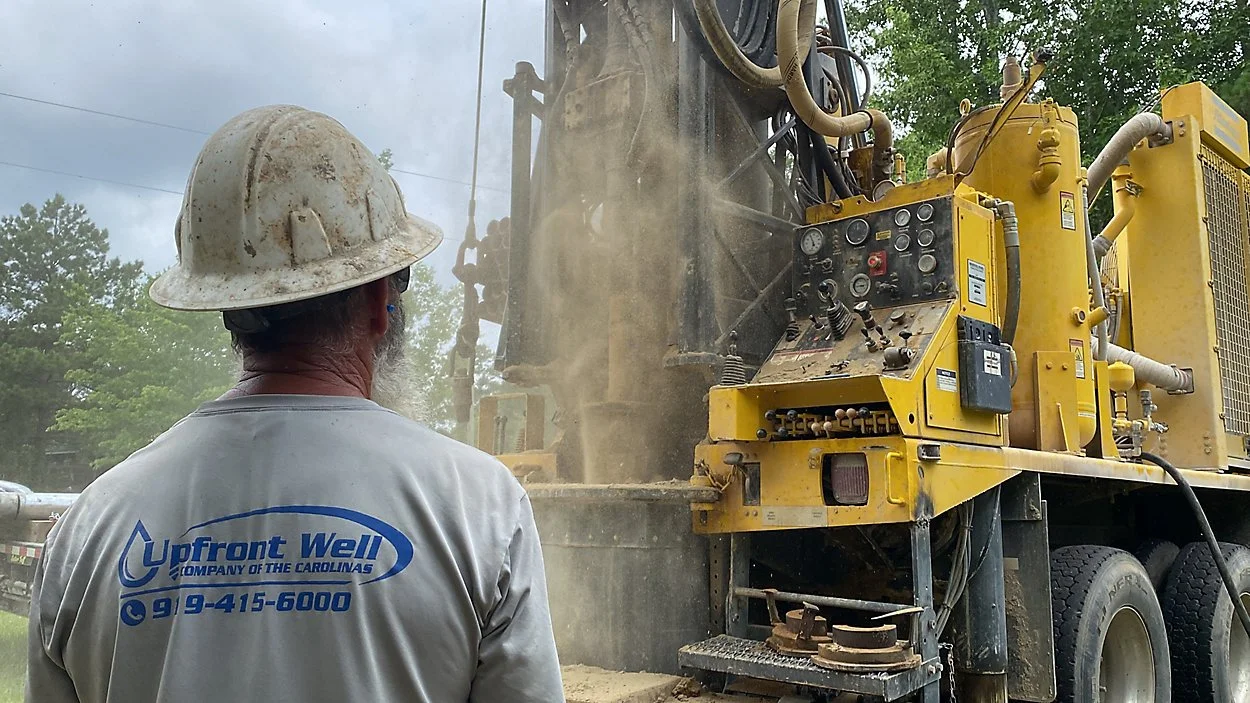
Cleaning out a deep bedrock well isn't a DIY job—it requires specialized equipment and high-pressure air rotary technology to clear out years of debris safely without damaging the well casing.
Here is the step-by-step process:
Step 1: Pulling the Equipment
We carefully remove the submersible pump, wiring, and drop pipe from the well to inspect them for wear, corrosion, or mechanical failure.
Step 2: Video or Depth Sounding Inspection
We evaluate the total depth of the well and check where the sediment line sits compared to its original drilled depth.
Step 3: High-Pressure Air Surging & Flushing
Using heavy-duty air rigs, we send massive, controlled bursts of compressed air deep into the well bore. This creates a powerful surging action that breaks loose mineral scale, dislodges heavy silt from the bottom, and forces decades of accumulated mud up and out of the top of the well casing.
Step 4: Re-Opening Bedrock Fractures
The surging action pushes water backward and forward through the underground rock veins, clearing out blocked fissures so natural groundwater can flow freely into the borehole again.
Step 5: Sanitization & System Reset
Once the well blows clear and clean, we disinfect the system, reinstall (or upgrade) the pump assembly, and re-test the gallon-per-minute (GPM) flow rate.
Cleanout vs. Drilling New: Which One Do You Need?
Option A: Well Rehabilitation (Cleanout)
When It’s Right: Your well was historically a great producer, but water flow has gradually declined or recently turned silty/muddy.
Expected Result: Restores original flow rate, clears sediment, and extends well lifespan at a fraction of new drilling costs.
Option B: New Well Drilling
When It’s Right: The well casing has collapsed, structural rock has caved in, or the surrounding local aquifer has permanently dried up.
Expected Result: A brand-new, code-compliant water source drilled to current environmental standards.
Upfront Honesty Comes First
At Upfront Well Company, we treat your property and pocketbook with respect. Master Contractor Felton Jacobs brings more than 35 years of local geology experience to every job site. If we can save your existing well with a professional cleanout and pump service, that is exactly what we will recommend.
Meet Your Expert:
Felton Jacobs | Founder & Master Well Contractor Felton Jacobs isn't just the name behind the company; he’s the boots-on-the-ground expert who has been drilling through North Carolina's tough Piedmont rock since 1989. With over three decades of hands-on experience, Felton has seen every water challenge Raleigh and Franklin County have to offer.
Professional Credentials:
NC Certified Well Contractor: Level A (Highest Certification Level)
Specialization: High-Pressure Air-Hammer Drilling & Complex Pump Systems
Memberships: Active member of the North Carolina Ground Water Association (NCGWA) and the National Ground Water Association (NGWA).
Local Authority: 35+ years serving Louisburg, Raleigh, Wake Forest, and the surrounding Triangle area.
“At Upfront, we don’t just drill holes; we build reliable water systems for our neighbors. My goal is to make sure every customer gets an honest assessment and a well that lasts a lifetime.” — Felton Jacobs